Choosing China’s top sterilization equipment is only one part of infection prevention. Real sterility depends on equipment design, validated procedures, trained operators, and consistent monitoring. Hospitals and medical manufacturers may use steam autoclaves, low-temperature sterilizers, dry-heat units, or specialized endoscope reprocessors. Each system must match the material, packaging, load size, and clinical risk.
The practical question is how to ensure sterility in medical environments. Reliable teams begin with clean instruments and correct loading. They check chamber temperature, pressure, exposure time, and drying performance. Chemical indicators provide visible evidence, while biological indicators offer stronger process verification. Calibration records, maintenance reports, and batch logs should remain complete and traceable. A damp pack is not ready for use.
Small details matter.
A top-performing sterilizer can still fail when staff overload the chamber or select an unsuitable cycle. Manufacturers with mature quality systems, documented testing, and responsive technical support can reduce these weaknesses. Buyers should review applicable standards, factory inspection evidence, validation data, and after-sales service before making a decision. However, no machine removes every risk. Human error, poor cleaning, damaged packaging, and rushed release procedures can undermine an otherwise excellent system. That reality deserves honest attention. Sterility assurance is not a single purchase; it is a monitored process that improves through evidence, training, and careful reflection.
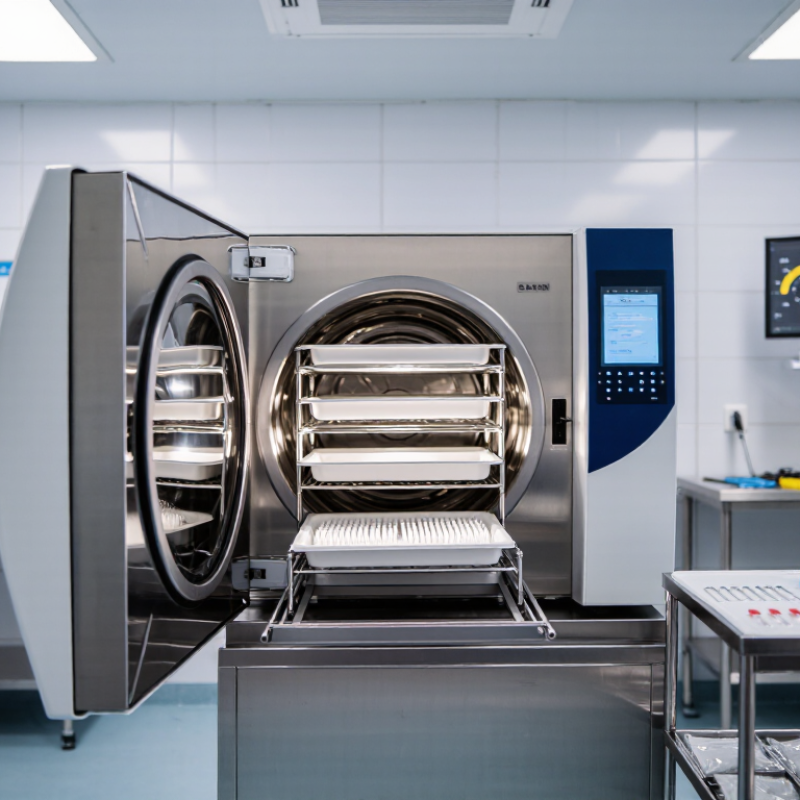
China’s top sterilization equipment is defined by measurable performance, not polished surfaces or impressive brochures. In practical hospital and laboratory settings, reliable units deliver repeatable microbial reduction under controlled conditions. They maintain stable temperature, pressure, humidity, or sterilant concentration throughout each cycle. Critical sensors must be calibrated, protected, and easy to verify. A clear display helps, but independent records matter more. Good equipment supports validated cycles, alarm history, load traceability, and routine biological or chemical indicators. It should also fit real workflows, including loading space, cooling time, drainage, and operator safety. Sterility is never assumed.
From technical evaluations, the strongest systems combine engineering with disciplined service. Chambers should resist corrosion and clean without hidden corners. Door seals need consistent compression. Software should prevent unauthorized cycle changes and expose failures clearly. Local technical support, spare parts, training, and documented maintenance affect performance as much as the machine itself. Buyers should examine test reports, factory quality controls, and verification procedures. Ask how performance changes with difficult loads. This is often overlooked. No system is perfect; even advanced equipment can fail when overloaded, poorly maintained, or used with unsuitable packaging.
Tips: Compare total operating cost, not purchase price alone. Request a sample cycle record. Watch a loading demonstration. Confirm calibration intervals and service response times. Keep independent release criteria for every load. Staff feedback also matters; confusing controls invite mistakes. Review performance trends monthly, then adjust procedures when evidence demands it.
| Evaluation Dimension | Typical Technical Data or Requirement | Why It Defines High-Quality Equipment | Recommended Verification Method |
|---|---|---|---|
| Sterilization Technology | Common technologies include saturated steam, ethylene oxide (EO), vaporized hydrogen peroxide (VHP), dry heat, and low-temperature plasma. | The selected method must match the material, geometry, packaging, moisture tolerance, and intended use of the load. | Review the validated cycle, product compatibility data, load configuration, and applicable sterilization standard. |
| Steam Sterilization Performance | Typical reference cycles are 121°C for approximately 15–30 minutes or 132–135°C for approximately 3–4 minutes, depending on the load and validated process. | Reliable temperature distribution, pressure control, air removal, and steam penetration are essential for achieving the required lethality. | Use calibrated temperature and pressure sensors, physical cycle records, chemical indicators, and biological indicators where required. |
| Temperature Uniformity | Uniformity must be demonstrated throughout the usable chamber and the defined load configuration; acceptance limits are established during validation. | Cold spots or excessive temperature variation can result in under-processing, material damage, or inconsistent sterilization outcomes. | Perform empty-chamber and loaded-chamber heat-distribution studies using calibrated data loggers. |
| Air Removal and Steam Penetration | Pre-vacuum systems should remove air effectively before steam exposure; porous-load testing may use a Bowie-Dick-type test where applicable. | Residual air can prevent steam from contacting all surfaces and may create localized sterilization failures. | Evaluate vacuum performance, leak rate, air-removal test results, and penetration indicators according to the validated process. |
| Low-Temperature Processing | EO cycles commonly operate around 37–63°C with controlled humidity and an exposure phase that may last several hours. VHP and plasma systems generally operate at lower temperatures, with cycle times varying by chamber and load. | Low-temperature methods protect heat- and moisture-sensitive devices while requiring strict control of concentration, humidity, exposure, and aeration or residue removal. | Verify process parameters, residual limits, aeration time, material compatibility, and biological-indicator performance. |
| Sterilization Assurance Level | A commonly specified target for terminal sterilization is a Sterility Assurance Level (SAL) of 10-6, meaning a validated probability of no more than one surviving microorganism in one million sterilized units. | SAL provides a measurable basis for evaluating process effectiveness rather than relying only on visual inspection or endpoint temperature. | Confirm documented validation, bioburden data, process challenge studies, and routine monitoring results. |
| Biological and Chemical Indicators | Biological indicators use resistant microorganisms or spores appropriate to the sterilization method. Chemical indicators provide a visible response to one or more process conditions. | Independent indicators help detect process deviations that may not be visible in the equipment display or printed cycle record. | Use indicators conforming to relevant ISO 11138 and ISO 11140 requirements, with defined placement and release procedures. |
| Calibration and Measurement | Critical sensors may include temperature, pressure, vacuum, humidity, gas concentration, hydrogen peroxide concentration, and flow sensors, depending on the technology. | Accurate measurement is necessary to demonstrate that the validated process conditions were achieved and maintained. | Maintain traceable calibration records, defined calibration intervals, alarm checks, and sensor-failure controls. |
| Cycle Documentation and Traceability | A complete record should include cycle identification, date and time, load information, operator, critical parameters, alarms, deviations, and release status. | Traceability enables investigation, product release decisions, trend analysis, and recall management when necessary. | Check electronic or printed records, audit trails, data-backup controls, user permissions, and integration with quality systems. |
| Packaging Compatibility | Packaging must allow sterilant penetration, protect the contents after processing, and maintain package integrity through handling and storage. | A successful cycle does not ensure sterility if the package is damaged, improperly sealed, or unsuitable for the selected sterilization method. | Evaluate seal strength, microbial barrier properties, package integrity, and process compatibility in accordance with ISO 11607. |
| Safety and Environmental Controls | EO systems require controls for toxic and flammable gas exposure. Hydrogen peroxide systems require concentration monitoring and ventilation. Steam systems require pressure-vessel and burn protection. | Operator protection, facility safety, emissions control, and emergency response are essential to responsible sterilization operations. | Review risk assessments, interlocks, alarms, ventilation, gas detection, pressure protection, and applicable occupational-safety requirements. |
| Applicable Standards | Relevant standards may include ISO 17665 for moist heat, ISO 11135 for EO, ISO 14937 for general sterilization requirements, ISO 11138 for biological indicators, ISO 11140 for chemical indicators, and ISO 11607 for sterile-barrier packaging. | Standards establish consistent requirements for equipment design, process development, validation, monitoring, and documentation. | Request conformity documentation, validation protocols, test reports, risk-management files, and current regulatory approvals where applicable. |
| Operational Reliability | Key indicators include cycle completion rate, unplanned downtime, alarm frequency, maintenance response time, chamber capacity, and validated load throughput. | High reliability supports consistent production, reduces failed loads, and lowers the risk of delayed product release. | Review service records, preventive-maintenance schedules, spare-parts availability, failure trends, and user training documentation. |
Note: The operating ranges shown are typical reference values only. Final sterilization parameters must be established and validated for the specific equipment, product, packaging system, load configuration, and applicable regulatory requirements.
Saturated heat denatures proteins and destroys bacteria, viruses, fungi, and spores.
They protect devices that could deform or fail under high heat.
Ionizing energy breaks microbial DNA and prevents reproduction.
Do not trust temperature displays alone.
Remove visible soil promptly. Clean, rinse, and dry every item completely.
Place instruments loosely in baskets. Keep packages away from chamber walls.
Record the load number, cycle, operator, and monitoring results.
Store sterile items in a clean, dry area with limited handling.
China’s top sterilization equipment is defined by reliable performance, precise control, robust construction, and compliance with recognized safety and quality requirements. Different technologies address microbial risks in different ways: steam uses heat and pressure, dry heat relies on sustained high temperatures, while low-temperature chemical or gas-based systems support heat-sensitive medical devices. Selecting the appropriate method depends on the materials, device design, packaging, and intended use.
Effective sterilization also requires careful load preparation, including proper cleaning, arrangement, packaging, and airflow or agent penetration. Sterility assurance is strengthened through physical monitoring, chemical indicators, biological testing, and accurate recordkeeping. Regular inspection, calibration, preventive maintenance, and timely replacement of worn components help equipment perform consistently. Together, these practices explain how to ensure sterility in medical environments and preserve sterile conditions throughout storage, handling, and clinical use.

 RosMed Medical