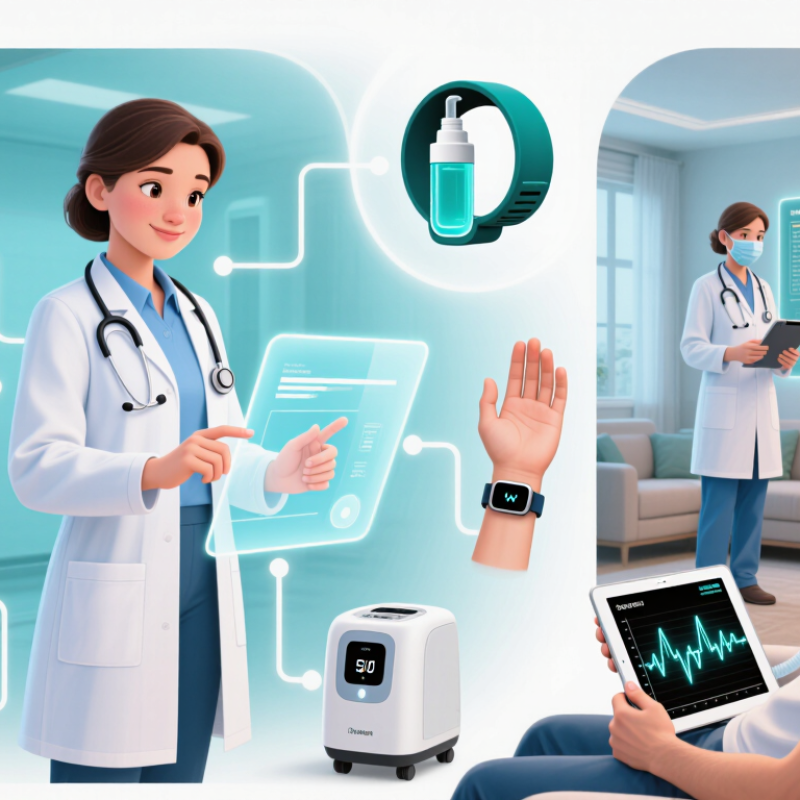
In 2026, respiratory care is increasingly shaped by tools that help clinicians see changes sooner and tailor support more closely. As WHO Director-General Dr. Tedros Adhanom Ghebreyesus has put it, “The future of health is digital.” For people living with asthma, COPD, or sleep-related breathing disorders, that future can mean connected inhalers, home oxygen monitoring, wearable sensors, and video visits with care teams. A small change matters: a patient can record breathlessness at home instead of trying to recall every detail during an appointment.
This is how technology improves respiratory care: it can bring useful measurements into everyday life, support earlier follow-up, and help clinicians make decisions with a fuller picture. Remote monitoring may flag falling oxygen levels or changing symptoms, but a device reading is not a diagnosis. Data needs clinical context, and patients need clear instructions about when to seek urgent help. Privacy, internet access, device comfort, and alarm fatigue also deserve attention. Not every tool fits every person.
The promise is real. So are the gaps. A dashboard cannot hear the strain in someone’s voice, and an app cannot replace a careful examination. The best systems combine reliable measurements with human judgment, practical training, and regular review. That balance is still being worked out. Readers exploring the best ways technology improves respiratory care should look beyond novelty: the useful question is whether a tool makes care safer, clearer, and easier to sustain.
In 2026, respiratory care increasingly reaches beyond the clinic. Connected spirometers can record airflow at home and send results to a care team. A clinician may notice a change between scheduled visits, rather than relying only on a patient’s memory. Small details matter: a reading taken after climbing stairs may look different from one taken at rest.
Remote monitoring can also help care teams follow oxygen levels, breathing patterns, and symptom reports over time. When data suggests a concerning change, a clinician can review it and decide whether follow-up is needed. Technology supports judgment; it does not replace an examination or a conversation. Not every alert is meaningful. Poor signal quality, device fit, or missed entries can make the picture less clear.
Telehealth makes routine check-ins easier for people who live far from a clinic or have limited mobility. Digital records can help clinicians compare test results and medication histories, while decision-support tools may flag patterns worth reviewing. Yet access is uneven, and some people find screens tiring or confusing. That matters. Respiratory teams need to explain how devices work, protect health information, and offer alternatives when home monitoring is impractical. Progress can be useful, but it is not always smooth.
Respiratory diagnosis is becoming more connected to everyday life. Digital questionnaires can capture when breathlessness begins, what triggers it, and how it changes overnight. That timeline may reveal patterns a brief clinic visit misses. Small details matter.
At home, connected spirometers can record airflow measurements over several days. A clinician may compare results with symptoms, medication use, and recent infections. Phone-based video visits also let care teams observe breathing effort and review inhaler technique. These tools can support earlier assessment, but they cannot replace a physical examination when symptoms are severe or rapidly worsening.
Wearable sensors may track oxygen levels, heart rate, or activity during ordinary routines. A drop while climbing stairs can prompt a closer review, yet a single reading is not a diagnosis. Cold fingers, movement, and device fit can distort measurements. The numbers can look cleaner than the patient feels. That gap deserves attention. Software may flag unusual patterns in breathing tests or medical images, helping specialists decide what to examine next. Clinicians still need to check the source data, consider other causes, and explain uncertainty clearly. Better digital records can make a conversation more precise, though not every alert will be useful.
Connected devices are making respiratory monitoring more continuous and less dependent on occasional clinic visits. A wearable sensor may track breathing rate, while a fingertip oximeter records oxygen levels during rest or sleep. A home hub can send readings to a care team for review. Small changes can matter. A gradual rise in nighttime breathing rate, for example, may prompt a clinician to check symptoms and treatment. These readings are clues, not a diagnosis.
Tips: Keep sensors clean and follow their fitting instructions. Record symptoms beside unusual readings, such as breathlessness after climbing stairs. Check device alerts with a healthcare professional, especially when readings conflict with how you feel.
Reliable monitoring depends on more than collecting numbers. Sensor placement, movement, cold fingers, and weak connections can affect results. Some devices also produce false alarms, which can cause worry. Clinicians should interpret trends alongside a person’s history, examination, and other tests. Patients need clear instructions about which changes require a call and which need urgent attention. Data sharing also deserves care: people should know who can view their readings and how long records are kept. Connected monitoring can support timely conversations, but it cannot replace clinical judgment. I would not treat a smooth dashboard as proof that breathing is fine.
A patient’s breathing can change with weather, infection, sleep, or missed medication. AI tools can help clinicians review these patterns across spirometry results, symptom diaries, and oxygen readings. The goal is not to replace clinical judgment. It is to make care more responsive to each person’s changing needs.
The need is substantial. The World Health Organization reports that chronic obstructive pulmonary disease caused 3.5 million deaths worldwide in 2021. It also estimates that asthma affected 262 million people in 2019. These figures describe different conditions and years, but they show why timely, tailored care matters.
A trend dashboard might flag worsening breathlessness alongside falling home lung-function readings, prompting a clinician to check in sooner.
But data can mislead. A faulty sensor, missed diary entry, or algorithm trained on unrepresentative patients may distort the picture. Clinicians should verify alerts against symptoms, medical history, and reliable measurements before adjusting treatment. Patients also need clear explanations of what data are collected and how they inform decisions. The WHO figures establish the burden, not proof that AI improves outcomes; that evidence still needs careful evaluation.
Telehealth can bring respiratory follow-up into the room where symptoms actually happen: beside an inhaler, a symptom diary, or a cold bedroom. Video visits let clinicians observe breathing patterns and discuss medication routines without requiring every patient to travel. Phone appointments can also help when broadband or camera access is limited. Small details matter.
The National Center for Health Statistics reported that 37.0% of U.S. adults used telemedicine in 2021. This national figure shows broad adoption, but it does not prove equal access for people with lung disease. The American Thoracic Society’s 2023 pulmonary rehabilitation guideline conditionally recommends offering people with stable COPD a choice between center-based rehabilitation and telerehabilitation. Choice is important: remote sessions may reduce travel barriers, while in-person care can offer supervision and equipment.
Remote care still has blind spots. A home pulse oximeter reading can be inaccurate, and a screen cannot replace a careful examination when symptoms worsen. Clinicians should explain when to seek urgent in-person care and check whether patients can use the technology confidently. A dropped connection is not a treatment plan. Nor should it be treated as patient failure. Telehealth works best when follow-up, device guidance, and a practical backup option are built into care.
They record when breathlessness starts, what triggers it, and how it changes overnight. Small details can reveal patterns a short visit may miss.
No. It can record airflow over several days, giving clinicians useful information to compare with symptoms and medication use. It is one clue.
Some track oxygen levels, heart rate, breathing rate, or activity during daily routines. A change while climbing stairs may deserve a closer look.
Movement, cold fingers, poor sensor fit, or weak connections can distort readings. The number may look reassuring, even when you feel worse.
No. It can support timely conversations, but clinicians still need to consider symptoms, medical history, and examination findings. Severe or rapidly worsening symptoms need prompt medical attention.
It can help clinicians review symptom diaries, lung-function results, and oxygen readings together. An alert may prompt an earlier check-in, not an automatic treatment change.
Note the reading alongside symptoms, such as breathlessness after stairs. Check device alerts with a healthcare professional, especially when the numbers conflict with how you feel.
Ask who can view the readings and how long records are kept. Clear explanations matter. A smooth dashboard is not proof that breathing is fine.
In 2026, technology is making respiratory care more timely, connected, and tailored to individual needs. Digital diagnostic tools can help clinicians identify breathing problems earlier by bringing together symptoms, test results, and other relevant health information. Connected monitoring devices can track respiratory measures over time, helping patients and care teams notice meaningful changes and respond with appropriate follow-up.
Artificial intelligence and data analytics can support personalized treatment by helping clinicians interpret patterns and adjust care plans to a patient’s circumstances. Telehealth also makes respiratory consultations and ongoing guidance more accessible, particularly for people who face distance or mobility barriers. Together, these developments show how technology improves respiratory care: by supporting earlier assessment, continuous monitoring, informed treatment decisions, and more convenient access to professional care. They complement, rather than replace, clinical expertise and communication between patients and healthcare providers.

RosMed Medical